Guide
What year was this photo taken? How to date an old photo
You rarely need a caption. People, streets and the print itself carry dates, and each clue narrows the range. Here is the order we use, with real archival photos from our game.
1. Start with the vehicles
Transport changed faster than anything else in a street. Horses and carts only: before about 1900 in most cities. Horse trams and the first electric trams with overhead wires: the 1890s to 1910s. Motor cars in numbers: after 1910. Ships help in harbours: sail and steam side by side point to the late 1800s.
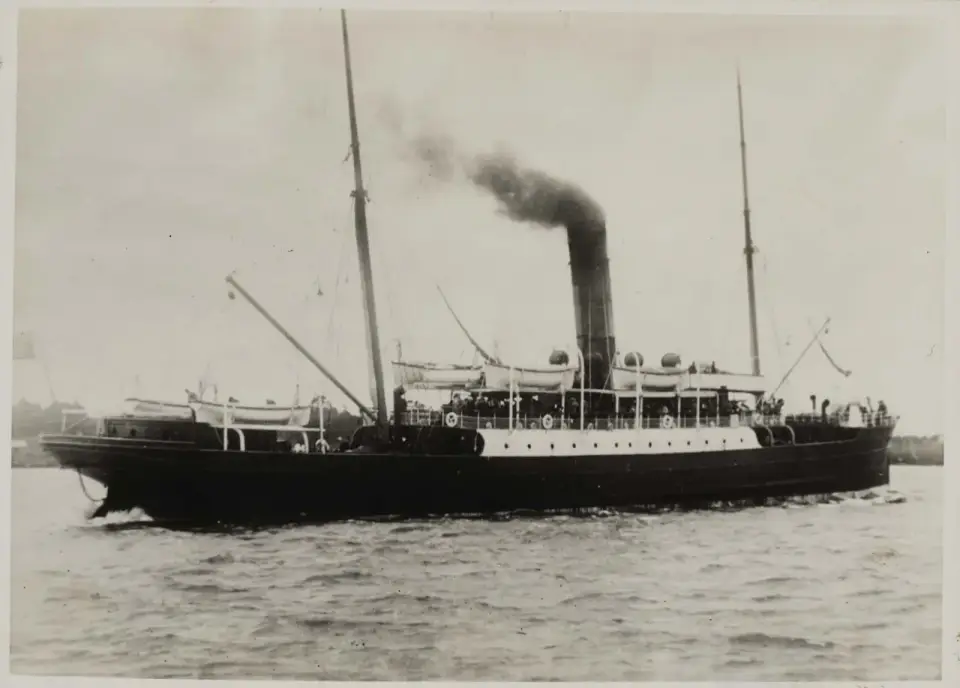
Sail and steam together
1883 · Auckland, New Zealand
A steamship that still carries sailing masts sits next to old sailing vessels. That mix belongs to the transition decades, and the year here is early in it.
Photo: Unknown photographer · Public domain · Wikimedia Commons
2. Read the clothes
Hemlines, sleeves, hats and collars follow fashion closely. Long dark skirts with aprons and white lace caps in a village scene tell you a region as well as a period; straw boaters on men are a summer favourite of the 1880s to 1910s; flat caps spread among workers from the 1890s.
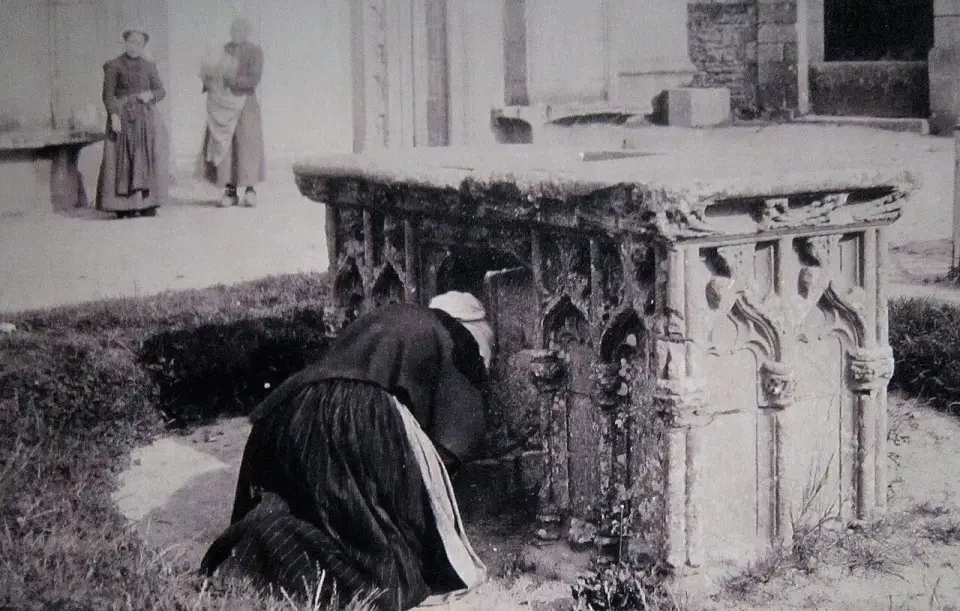
Breton headdresses
1890 · Minihy-Tréguier, Brittany, France
Long dark skirts, aprons and white Breton caps. Rural dress changed slowly, so a village scene like this can fool you by a decade: look for a second clue before you commit.
Photo: Charles Géniaux · Public domain · Wikimedia Commons
3. Look at the street furniture
Gas lamps, then electric arc lamps; unpaved roads, then cobbles, then asphalt; hand-painted shop signs, then enamel and printed posters; telegraph poles, then dense overhead wiring. Each one is a step on the timeline.
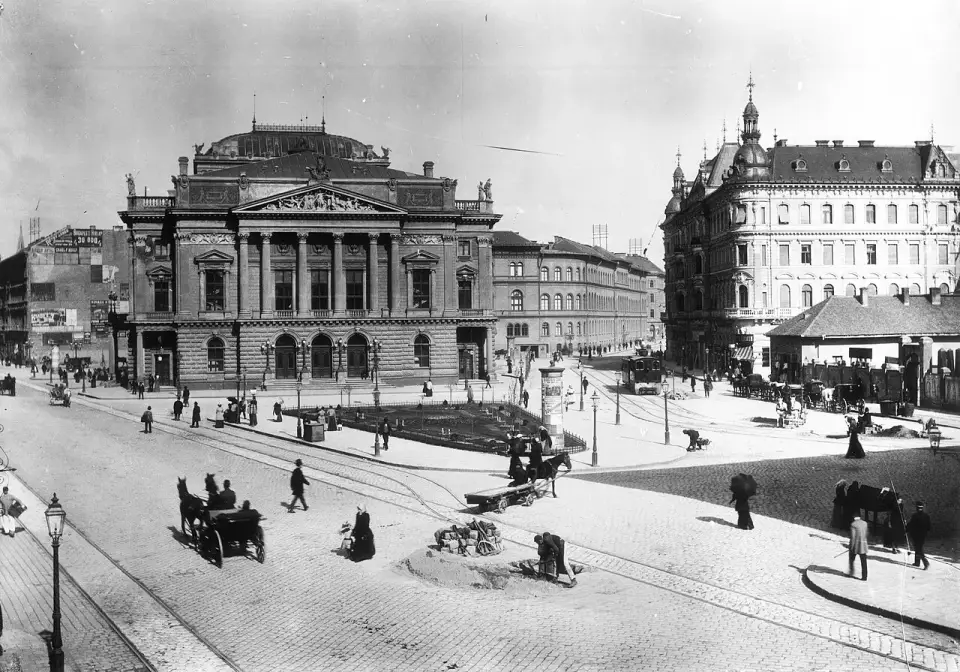
Cabs and tram rails
1900 · Budapest, Hungary
Horse-drawn cabs wait on a square crossed by tram tracks, under gas lamps. Horse cabs and trams shared big-city streets around the turn of the century.
Photo: György Klösz · Public domain · Wikimedia Commons
4. Check the photograph itself
The object dates the picture too. Cabinet cards with a studio name printed on thick card were popular from the 1870s to about 1900. Oval vignettes, sepia toning and very long exposures (blurred people walking past) point to the 19th century. Snapshots with tilted horizons and casual poses came after roll film, from the late 1880s.
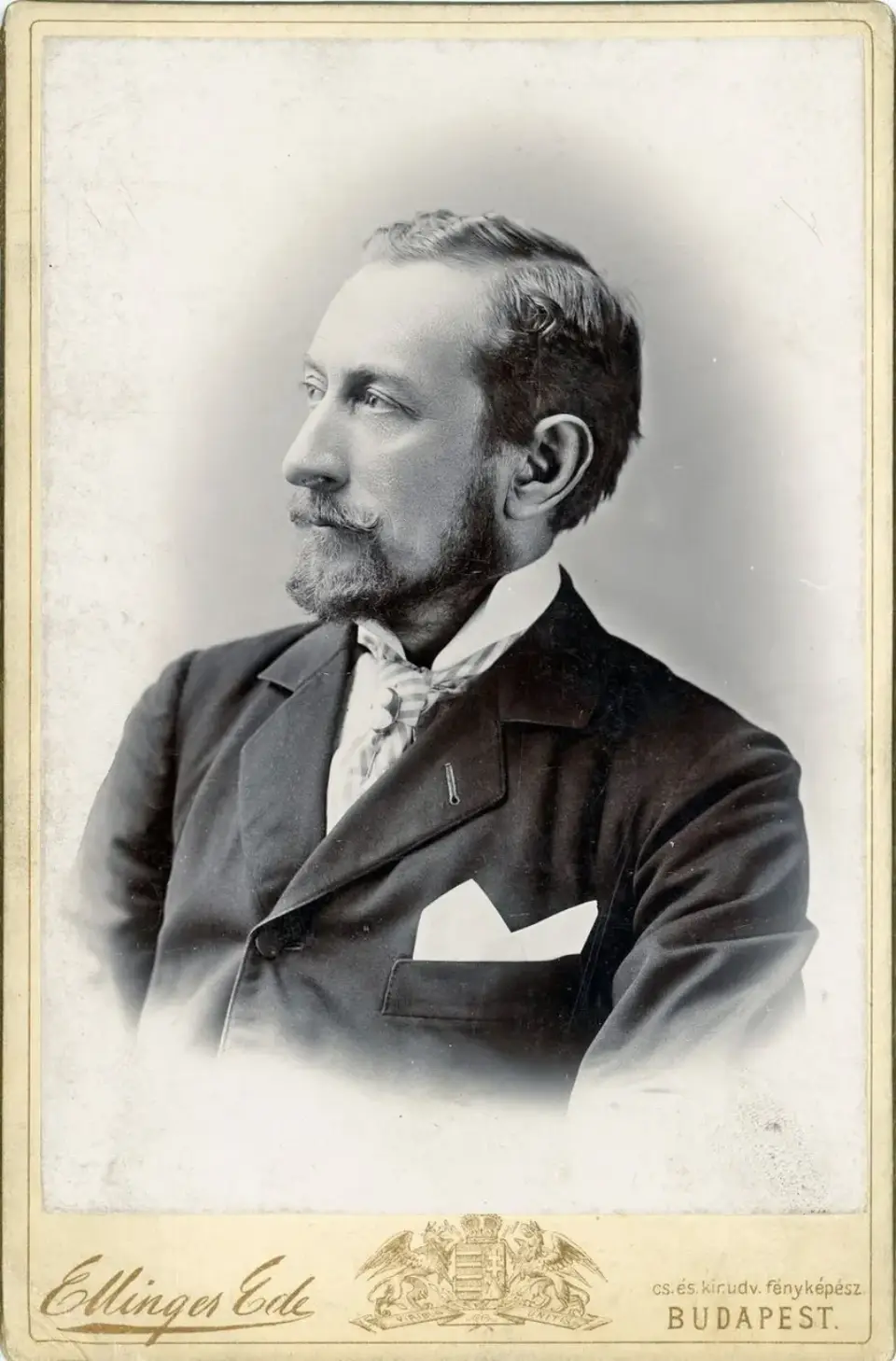
A studio cabinet card
1896 · Budapest, Hungary
A studio portrait on a cabinet card with the studio's ornate printed name, a pointed beard and a high collar: a typical studio card of the 1890s.
Photo: Ede Ellinger · Public domain · Wikimedia Commons
5. Combine, then commit
Write down the earliest year each clue allows and the latest. The overlap is your answer range; pick its middle. In the game that habit alone keeps most guesses within ten years, which is still 450 points or more.
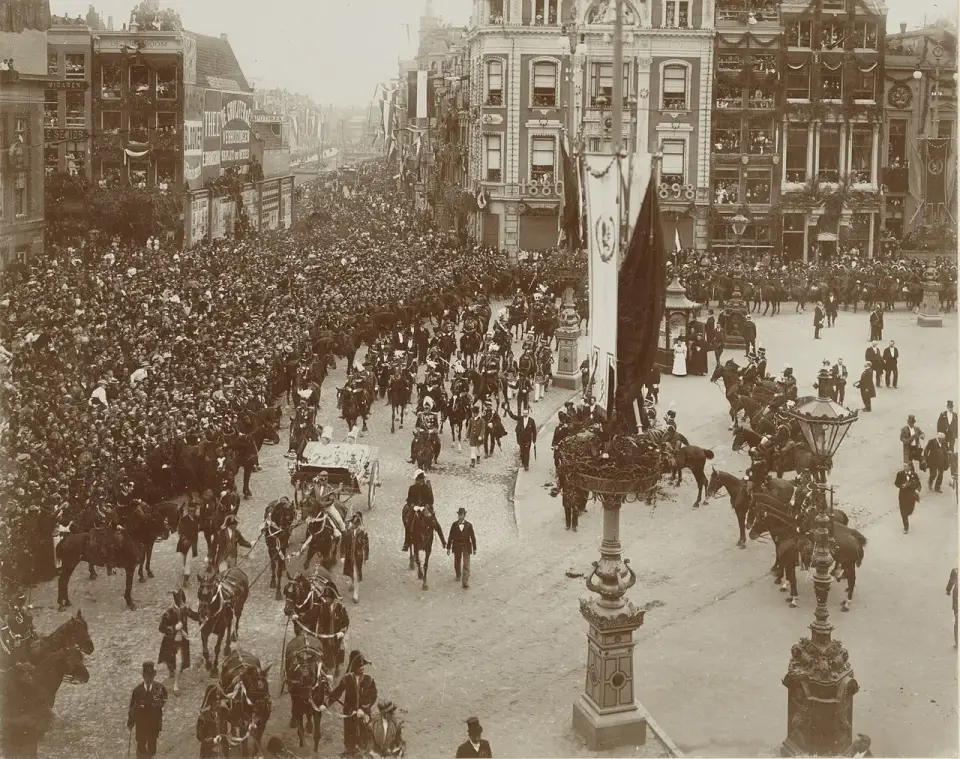
Putting it together
1898 · Amsterdam, Netherlands
Horse-drawn carriages, a mounted escort, a crowd in hats and dark coats, no cars at all: every clue overlaps in the 1890s.
Photo: Rijksmuseum · CC0 · Wikimedia Commons